
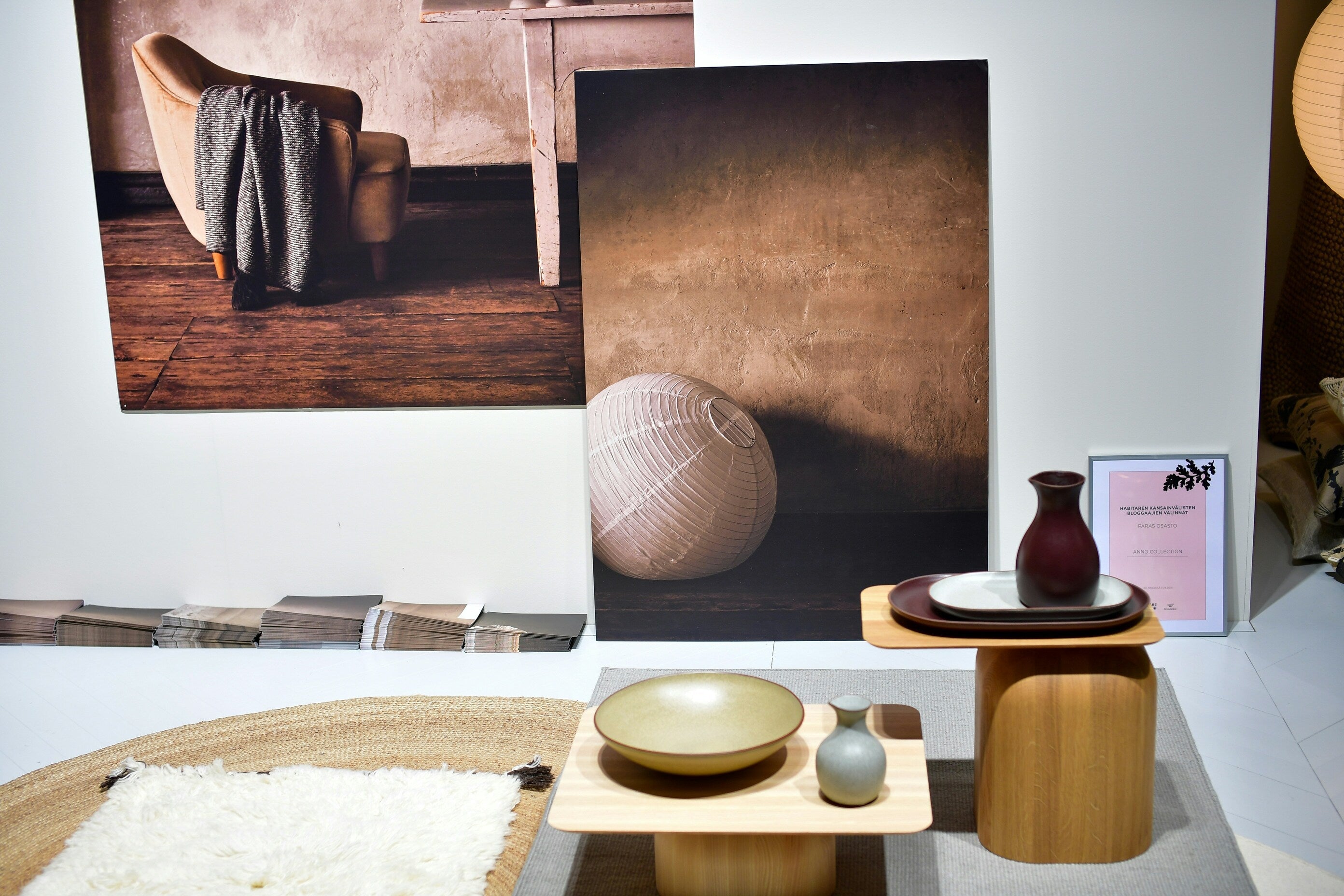

Materials & Craft
Bamboo, Linen, Ceramic, Glass: The Natural Materials That Define Japandi Homes
The materials in a Japandi home are not simply aesthetic choices. They are selected because of how they age, how they feel to touch, how they affect the atmosphere of a room, and what they communicate about the people who chose them.
If you are new to the style itself, start with our guide to what Japandi is. This one looks at the materials that make it work.
Bamboo: Fast-Growing, Endlessly Versatile
Bamboo reaches maturity in three to five years, compared with decades for most hardwoods. It usually needs little water and few or no pesticides, and it regrows from its roots after harvesting. That makes it one of the most renewable materials used in homes.
In Japandi interiors, bamboo appears in lighting, furnishings, and as a tool in traditional Japanese practices. A bamboo pendant light allows light to pass through the gaps in the weave, casting dappled warm patterns on the ceiling and walls. No synthetic material replicates this.
In the tea ceremony, bamboo appears as the whisk (chasen) used to prepare matcha, the scoop (chashaku) for measuring tea, and the lid of a tea canister. Objects that are beautiful because of their function: made precisely, used ritually, improved by use.

Linen: The Textile That Gets Better With Age
Linen is made from the flax plant, one of the oldest textile fibers people have used. The fibers are long and strong, and unlike most textiles, linen becomes softer and more beautiful with repeated washing.
This is essential to understanding why linen is the defining Japandi textile. It is the wabi-sabi textile: it looks better for having been used. A freshly laundered linen duvet with its natural creases and softly rumpled texture looks more beautiful than a perfectly pressed one. For how linen compares with cotton in bed, see linen vs cotton vs Egyptian cotton bedding.
"Linen napkins develop a soft patina over years of use that printed cotton napkins never acquire."
On the nature of natural materials


Ceramic: Where Craft Becomes Philosophy
A ceramic object made by hand carries the fingerprints of its maker, sometimes literally. It is never perfectly symmetrical. Its glaze is never perfectly uniform. These qualities are not imperfections; they are what make it irreplaceable.
Ru Cellar ceramic uses a kiln technique that creates a distinctive crackle glaze as the piece cools. The pattern of cracks is unique to each piece and entirely beyond the maker's control: wabi-sabi made tangible. No two pieces are identical.
A hand-thrown ceramic bowl does not just hold food. It makes the act of eating feel slightly more deliberate. A ceramic tea set does not just brew tea. It makes the ritual feel worth doing slowly.
Glass: Light, Clarity and Restraint
Glass is the quiet material in a Japandi home. It does not add texture the way linen or ceramic does. Instead, it carries light. A clear glass fair cup shows the color of the tea. A frosted or opal glass shade hides the bulb and spreads a soft, even glow.
Look for glass that feels substantial in the hand, with simple shapes and no decoration. Hand-blown pieces often have tiny bubbles or slight variations in thickness. Like the crackle in a glaze, those marks are part of the character.
Wood, Rattan and Stone
Wood is the backbone of most Japandi rooms. Oak and ash bring a light, Scandinavian feel, while walnut and dark-stained wood add depth. Solid wood or a good veneer shows real grain; printed laminate does not.
Rattan is a climbing palm with solid, flexible stems, which is why it weaves so well into chairs, baskets and lamp shades. It adds warmth and texture without visual weight.
Stone, from a slate tray to a travertine side table, brings weight and coolness. Used sparingly, it balances softer materials and keeps a room from feeling too sweet.
How These Materials Work Together
The power of Japandi material choices is cumulative. Each material on its own is beautiful. Together, they create a coherent sensory environment.
A bedroom with linen bedding, a bamboo bedside lamp, and a single ceramic object creates a space that is visually consistent and texturally layered. A tea corner with a ceramic tea set, a glass fair cup, a bamboo whisk, and a rattan tray creates a ritual space that makes the act of tea preparation feel like something worth doing slowly. The common thread: they come from natural sources, are made with craft, age with character, and are tactile in a way that synthetic materials are not.
Caring for Natural Materials
- Linen: wash in cool or warm water with a mild detergent and skip fabric softener. Line dry or tumble dry on low.
- Wood: wipe with a barely damp cloth, use coasters and oil cutting boards and untreated surfaces now and then.
- Bamboo tools: rinse without soap and let them dry fully before storing, so they do not crack or mold.
- Ceramics: hand wash unless the piece is labeled dishwasher-safe, and let unglazed bases dry before stacking.
- Rattan: dust regularly and keep it out of strong direct sun, which can dry and fade it.
Where to Start
You do not need to replace everything. Pick the object you touch most often, such as your bedding, a daily mug or the lamp you switch on every evening, and make that one natural. The change is easy to feel, and it shows you what to choose next.
Our decor and lifestyle collection brings together ceramics, lighting and textiles chosen for exactly this kind of everyday use.

Frequently asked questions
What materials are used in Japandi design?
Wood (especially oak, ash and walnut), bamboo, rattan, linen, cotton, wool, paper, ceramic, stone and glass. The common thread is that they are natural, tactile and age well.
Is bamboo a sustainable material?
Generally, yes. Bamboo grows quickly and regrows from its roots after harvesting. How it is processed still matters, so solid bamboo with simple finishes is the better choice.
Does linen get softer over time?
Yes. Linen fibers relax with washing and use, and most linen feels noticeably softer after several washes. Avoid high dryer heat and fabric softener.
How do you care for handmade ceramics?
Hand wash with warm water and mild soap unless the piece is labeled dishwasher-safe, avoid sudden temperature changes and let unglazed bases dry fully. Crackle glazes can slowly pick up tea stains in their fine lines, which many people enjoy as patina.
What is the difference between rattan and bamboo?
Rattan is a climbing palm with solid, flexible stems that bend easily for weaving. Bamboo is a grass with hollow, jointed stems that are stiffer and stronger in a straight line.
In a world that increasingly presents us with surfaces that have no texture, no variation, and no history, these materials feel like a return to something real.


Share:
Japandi Tea Ceremony
Japandi Lighting Guide