
Home & Lighting
Japandi Lighting Guide: How to Light a Minimal Home So It Actually Feels Warm
Lighting is the most underestimated element in interior design. Get it wrong and even a beautifully curated Japandi room will feel cold. Get it right, and an ordinary room transforms after 6pm into somewhere that genuinely feels good to be.
The Fundamental Problem With Most Home Lighting
Most homes are lit the way offices are lit: bright, even, overhead, cool. Overhead lighting eliminates shadow — and shadow is what gives a room depth, warmth, and a sense of enclosure. A room lit entirely from above looks like a retail store at 9am. Nowhere for the eye to rest.
Human beings evolved for millions of years with firelight after dark — warm, low, flickering, directional. The nervous system still responds to light that mimics these qualities by downregulating. Japandi lighting is an attempt to give modern rooms something closer to what the nervous system actually needs.
Color Temperature: The Most Important Number
2700K
Bedrooms. Evening use only.
3000K
Warm white. Good all-day.
4000K
Kitchens only.
5000K+
Office only.
The shift from 4000K to 2700K costs the price of a few bulbs and takes twenty minutes. The visual and psychological difference is immediate.

Layered Lighting: The Japandi Approach
A Japandi room never relies on a single light source. It is lit in layers:
Ambient lighting
The background layer — enough light to move safely through the room. Typically a single pendant, never very bright, never harsh overhead.
Task lighting
Serves specific functions: reading, cooking, working. A directed wall-mounted reading light. A desk lamp that illuminates the surface without flooding the room.
Accent lighting
Creates atmosphere: a small lamp on a shelf, a candle, warm light in a corner. Not functional — there to create warmth and depth.

Bamboo and Rattan Lighting: Why the Material Matters
A woven bamboo or rattan shade allows light to pass through the gaps in the weave. The result is a warm glow that extends beyond the shade itself, casting dappled patterns on the ceiling and walls. No synthetic material mimics this convincingly.
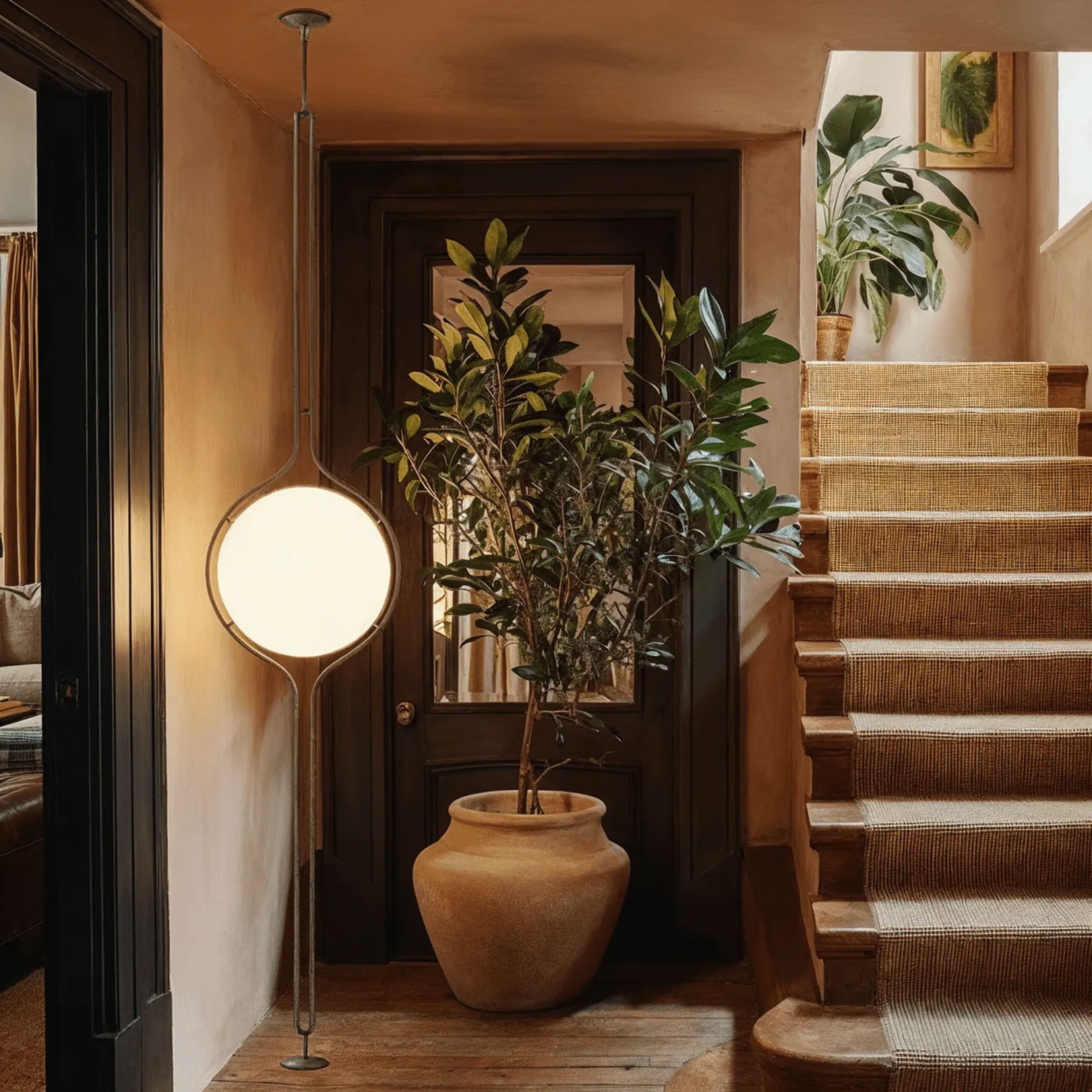
A bamboo pendant hung over a dining table does not just illuminate the table — it creates a pool of warm light that makes everyone sitting at it feel more at ease. This is exactly what firelight did for 99% of human history.
A Simple Lighting Upgrade — In Order of Impact
Replace all bulbs with 2700K warm LEDs. Largest impact, lowest cost.
Turn off overhead lighting after 6pm. Use only lamps for a week. Notice the difference.
Add one bamboo or rattan pendant in a room that currently has only overhead lighting. Hang it lower than feels natural.
Add bedside lamps if you do not have them. Remove the overhead light from your evening routine entirely.
Add one stone or ceramic wall lamp. The quality of light from natural materials is different in a way that photographs cannot capture.
Lighting is the last thing most people think about when decorating a room and the first thing that needs to change. In a Japandi home, it is arguably the single most important element. The good news: it is also the most affordable to change.
Share:
Natural Materials
How to Create a Japandi Bedroom