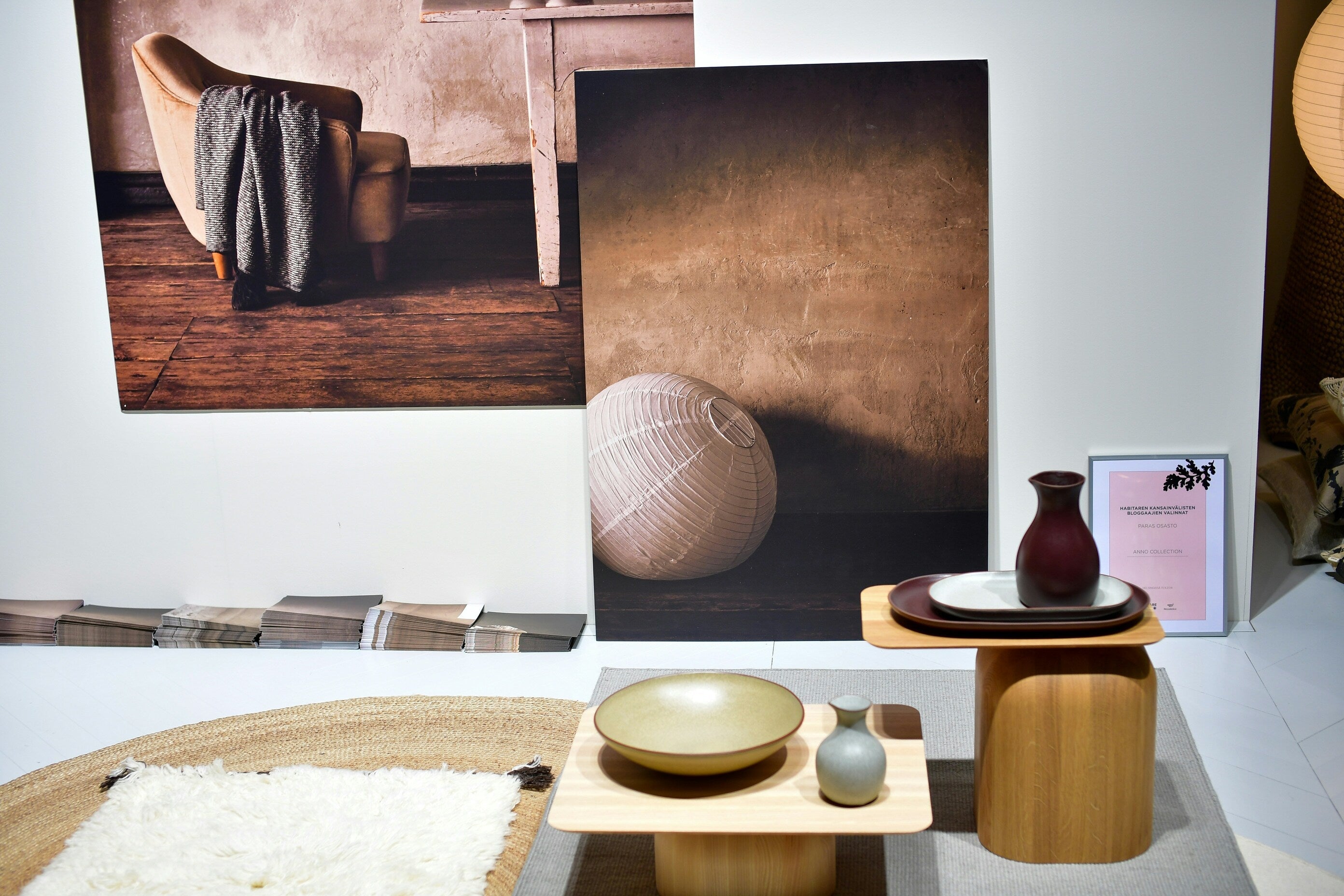

Materials & Craft
Bamboo, Linen, Ceramic, Glass: The Natural Materials That Define Japandi Homes
The materials in a Japandi home are not simply aesthetic choices. They are selected because of how they age, how they feel to touch, how they affect the atmosphere of a room, and what they communicate about the people who chose them.
Bamboo: Fast-Growing, Endlessly Versatile
Bamboo reaches full maturity in three to five years — compared to thirty to fifty years for most hardwoods — and requires no pesticides, minimal water, and regenerates naturally after harvesting. It is one of the most sustainable building materials on earth.
In Japandi interiors, bamboo appears in lighting, furnishings, and as a tool in traditional Japanese practices. A bamboo pendant light allows light to pass through the gaps in the weave, casting dappled warm patterns on the ceiling and walls. No synthetic material replicates this.
In the tea ceremony, bamboo appears as the whisk (chasen) used to prepare matcha, the scoop (chashaku) for measuring tea, and the lid of a tea canister. Objects that are beautiful because of their function — made precisely, used ritually, improved by use.

Linen: The Textile That Gets Better With Age
Linen is made from the flax plant, cultivated for over 30,000 years. The fibers are two to three times stronger than cotton, naturally antibacterial, and — unlike most textiles — become softer and more beautiful with repeated washing.
This is essential to understanding why linen is the defining Japandi textile. It is the wabi-sabi textile: it looks better for having been used. A freshly laundered linen duvet with its natural creases and softly rumpled texture looks more beautiful than a perfectly pressed one.
"Linen napkins develop a soft patina over years of use that printed cotton napkins never acquire."
On the nature of natural materials


Ceramic: Where Craft Becomes Philosophy
A ceramic object made by hand carries the fingerprints of its maker — sometimes literally. It is never perfectly symmetrical. Its glaze is never perfectly uniform. These qualities are not imperfections; they are what make it irreplaceable.
Ru Cellar ceramic uses a kiln technique that creates a distinctive crackle glaze as the piece cools. The pattern of cracks is unique to each piece and entirely beyond the maker's control — wabi-sabi made tangible. No two pieces are identical.
A hand-thrown ceramic bowl does not just hold food — it makes the act of eating feel slightly more deliberate. A ceramic tea set does not just brew tea — it makes the ritual feel worth doing slowly.
How These Materials Work Together
The power of Japandi material choices is cumulative. Each material on its own is beautiful. Together, they create a coherent sensory environment.
A bedroom with linen bedding, a bamboo bedside lamp, and a single ceramic object creates a space that is visually consistent and texturally layered. A tea corner with a ceramic tea set, a glass fair cup, a bamboo whisk, and a rattan tray creates a ritual space that makes the act of tea preparation feel like something worth doing slowly. The common thread: they come from natural sources, are made with craft, age with character, and are tactile in a way that synthetic materials are not.

In a world that increasingly presents us with surfaces that have no texture, no variation, and no history — these materials feel like a return to something real.
Share:
Japandi Tea Ceremony
Japandi Lighting Guide