

Japandi and Scandinavian style are often mentioned in the same breath, and it is easy to see why. Both love natural materials, both avoid clutter, and both aim for homes that feel calm and livable. Look at a few photos side by side, though, and the differences start to show.
This guide explains where each style comes from, how they differ in color, wood, furniture and mood, and how to tell which one suits the way you actually live.
Where each style comes from
Scandinavian style
Scandinavian design grew out of Denmark, Sweden, Norway and Finland, and became widely known in the mid-20th century. It is shaped by long, dark northern winters. Homes needed to feel bright, warm and practical during months of limited daylight, so the style leans on white walls, pale woods and plenty of soft textiles.
A key idea behind it is the Danish concept of hygge, a feeling of coziness and comfort: candles, wool throws, a warm drink, good company. Scandinavian design is also rooted in functionalism, the belief that everyday objects should be useful, well made and accessible.
Japandi style
Japandi is a blend of Japanese and Scandinavian design. The name is a recent invention, but the connection is older. Both traditions share a respect for craft, natural materials and simplicity.
The Japanese side brings ideas like wabi-sabi, an appreciation for imperfection, natural aging and quiet beauty, and a strong sense of restraint. Where Scandinavian style aims for cozy, Japandi aims for calm. It keeps the comfort of the Nordic home but adds more stillness, deeper colors and a more curated feel. If you want the fuller picture, our guide to what Japandi is covers the style in more depth.
Color palette: bright and airy vs warm and grounded
Color is the clearest way to tell the two styles apart.
Scandinavian palettes are light. Think crisp white walls, pale gray, soft beige and occasional pastel accents like dusty blue or blush. The goal is to bounce as much daylight around the room as possible.
Japandi palettes are warmer and more grounded. They often start with off-white, sand, clay or greige instead of pure white, then add deeper notes:
- Charcoal and soft black
- Earthy tones like terracotta, olive and rust
- Muted greens and stone greys
- Natural wood tones from honey to dark walnut
A simple test: if a room feels bright and fresh, it leans Scandinavian. If it feels quiet and slightly moody, with more contrast between light and dark, it leans Japandi.
Wood, materials and texture
Both styles depend on natural materials, but they use them differently.
Scandinavian interiors favor pale woods like birch, ash, beech and pine, often with a light or whitewashed finish. Textiles are soft and plentiful: chunky knits, sheepskins, wool throws and layered cushions.
Japandi interiors mix light and dark woods more freely. A pale oak floor might sit beside a dark-stained cabinet or a walnut table. Other common materials include:
- Linen and cotton in relaxed, slightly rumpled textures
- Paper, especially in lighting, inspired by Japanese lanterns
- Bamboo, rattan and jute for warmth and texture
- Handmade ceramics with uneven glazes and visible craft
- Stone and clay for a sense of weight and permanence
The texture story is different too. Scandinavian texture is about softness and coziness. Japandi texture is about honesty: you see the grain, the weave, the fingerprints of the maker. A slightly irregular handmade bowl is a very Japandi object. It is not perfect, and that is the point.
Furniture and layout
Scandinavian furniture is known for clean lines, gentle curves and practical design. Pieces tend to sit at a standard height, with tapered legs that make them feel light. Rooms often have a relaxed, lived-in arrangement with layered seating and plenty of places to curl up.
Japandi furniture borrows the same clean lines but often sits lower to the ground, a nod to Japanese interiors where floor seating and low tables are traditional. Shapes are simple and solid. There are fewer pieces overall, and each one is chosen with care.
Layout reflects this. In a Japandi room you will notice more empty space: an open stretch of floor, a bare section of wall, a single object on a shelf. That emptiness is intentional. It gives the eye somewhere to rest. Our Japandi living room ideas show how to apply this in a real room.
Decor and accessories
This is where the two styles feel most different in daily life.
Scandinavian decor tends to be generous and cheerful: candles everywhere, plants, graphic prints, stacks of books, layered throws. It is minimal compared to many styles, but it welcomes a fair amount of stuff, as long as it is tidy.
Japandi decor is edited down. The approach is closer to "fewer, better things":
- One meaningful artwork rather than a busy gallery wall
- A single branch in a vase instead of a full bouquet
- A small group of ceramics with space around them
- Soft, diffused lighting rather than many bright sources
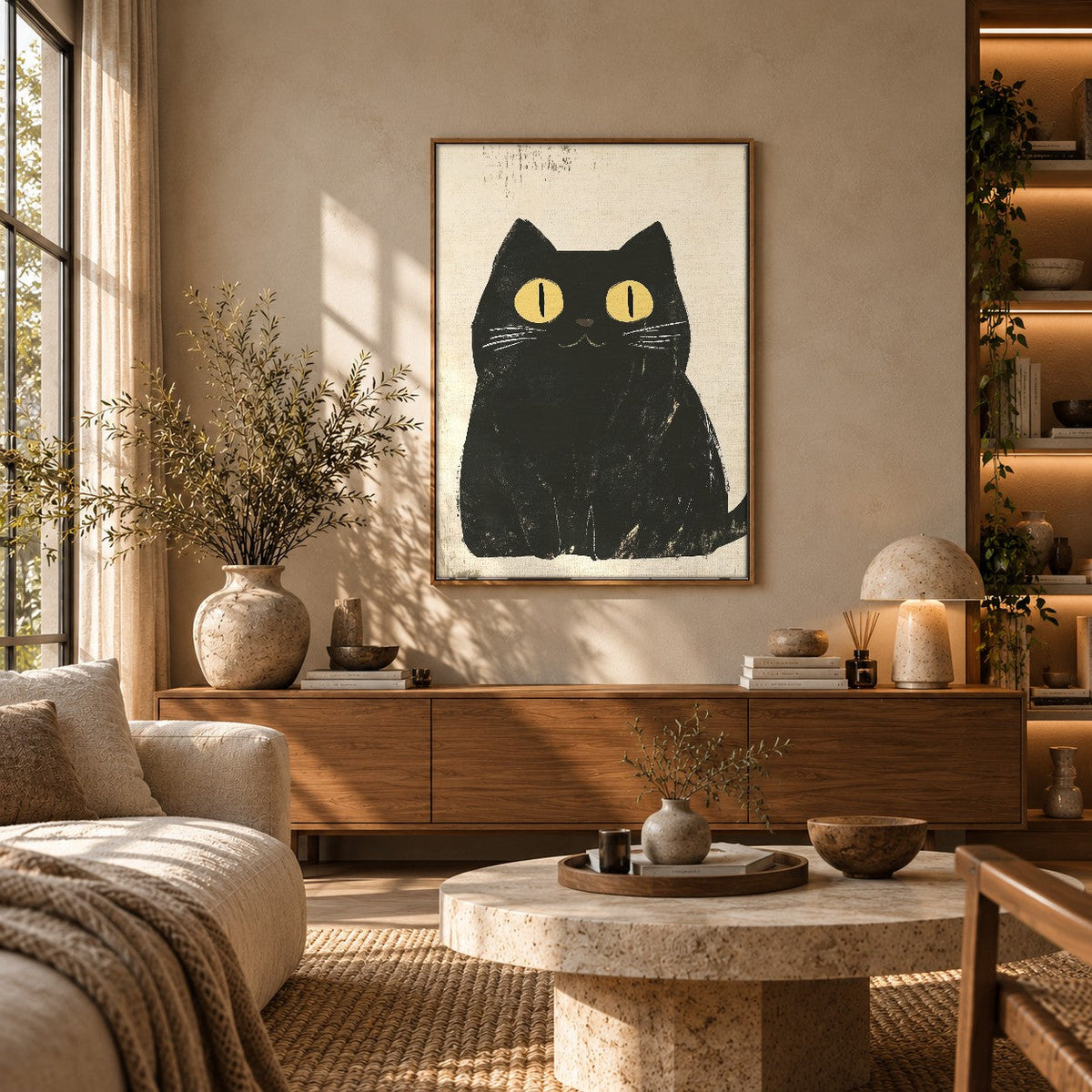
Wall art is a good example. Scandinavian homes often feature bold graphic posters or abstract shapes in bright accents. Japandi homes lean toward quieter imagery: ink-style landscapes, nature motifs, Japanese woodblock-inspired prints or soft abstracts. Browse our wall art collection to see the kind of calm, nature-led pieces that suit a Japandi room.
Lighting and mood
Scandinavian lighting aims to fight the dark. You will see many lamps, candles and fixtures, often in white, brass or pale wood, layered to create warm pools of light through long winter evenings.
Japandi lighting is softer and more sculptural. Paper and fabric shades, rounded domes and warm, low light are typical. A single pendant over a dining table can define the whole room. Shapes like the Wabi dome pendant light show how lighting in this style works as both function and quiet sculpture.
The mood follows. Scandinavian rooms feel friendly and inviting, with a bit of lively energy. Japandi rooms feel restful and grounded, closer to a retreat.
Side by side: the key differences
- Feeling: Scandinavian is cozy and bright. Japandi is calm and grounded.
- Colors: Scandinavian uses whites and pale neutrals. Japandi uses warm neutrals with darker, earthy accents.
- Wood: Scandinavian prefers pale woods. Japandi mixes light and dark woods.
- Furniture: Scandinavian is light and practical. Japandi is lower, simpler and fewer in number.
- Decor: Scandinavian welcomes layers and personal objects. Japandi favors a few carefully chosen pieces.
- Philosophy: Scandinavian is rooted in hygge and functionalism. Japandi adds wabi-sabi and restraint.
Which style is right for you?
Ask yourself a few honest questions:
- Do you love lots of throws, cushions and candles? You might lean Scandinavian.
- Do you feel calmer when surfaces are mostly clear? Japandi may suit you better.
- Does your home get little natural light? A Scandinavian palette can help brighten it, though Japandi's warm off-whites work well too.
- Do you enjoy handmade, imperfect objects with a story? That is very Japandi.
You also do not have to choose. Japandi already borrows heavily from Scandinavian design, so moving between them is easy. Start with a Scandinavian base of light walls and simple furniture, then add one or two darker wood pieces, a linen or cotton bedding set in a soft neutral, handmade ceramics and a quiet piece of art. Clear away a few things. The room will shift toward Japandi almost on its own.
Frequently asked questions
What is the main difference between Japandi and Scandinavian style?
Scandinavian style is brighter and cozier, with white walls, pale woods and plenty of soft textiles. Japandi is calmer and more grounded, with warmer neutrals, darker wood accents, lower furniture and fewer objects.
Is Japandi warmer than Scandinavian style?
In color, yes. Japandi palettes start with off-white, sand, clay and greige and add deeper notes like charcoal and walnut. Scandinavian palettes lean on crisp white and pale gray to bounce daylight around.
Can you mix Japandi and Scandinavian decor?
Yes, easily, since Japandi already borrows from Scandinavian design. Start with a light Scandinavian base, then add a darker wood piece, handmade ceramics and more empty space.
What wood is used in Japandi style?
Both light and dark woods. Oak and ash are common, often paired with walnut or dark-stained pieces for contrast. Scandinavian rooms usually stick to pale birch, ash, beech and pine.
Is Japandi just minimalism?
No. Japandi is minimal, but it is warmer than strict minimalism. It relies on natural materials, visible texture and soft light so a room feels lived in, not empty.
Both styles share the same heart: a home that is simple, natural and made for real life. If the calmer, more grounded side of that idea speaks to you, take a look around our decor collection for pieces chosen with Japandi living in mind. Orders over $149 ship free, and returns are easy within 30 days.


Share:
7 Bedroom Rules for Deeper Sleep
How to Choose the Right Rug Size for Every Room